The manufacturing of MS (Mild Steel) billets and TMT (Thermo-Mechanically Treated) bars is fundamental to the construction and infrastructure development sectors. These essential components serve as the backbone of numerous structural projects, ranging from residential buildings to industrial complexes. Understanding the intricate process behind their production sheds light on the vital aspects of the steel industry and its contribution to the global economy.
Introduction to MS Billets and TMT Bars:
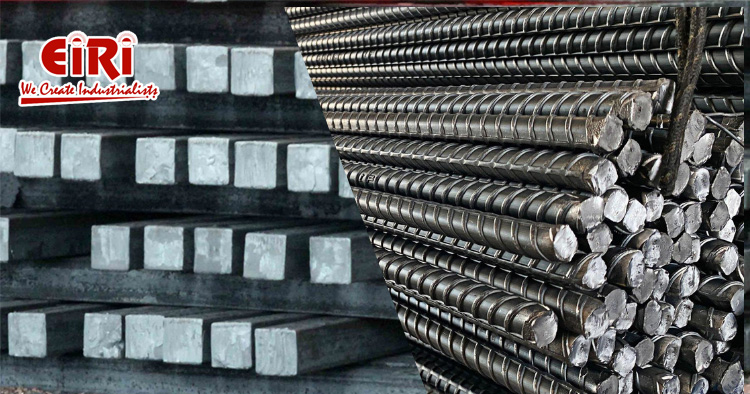
MS billets, also known as steel billets, are semi-finished steel products that serve as raw materials for various steel products. They are typically square or rectangular in shape and are produced through the process of continuous casting. Once formed, MS billets undergo further processing to transform them into TMT bars.
TMT bars, on the other hand, are high-strength reinforcement bars used in construction projects to provide structural integrity and stability. The thermo-mechanical treatment process imparts superior mechanical properties to the steel, making TMT bars highly resilient to bending and torsional stresses.
The Manufacturing Process:
Production of MS Billets:
- The production journey begins with the melting of scrap metal in an electric arc furnace (EAF) or a basic oxygen furnace (BOF). These furnaces heat the scrap metal to high temperatures, transforming it into molten steel.
- The molten steel is then poured into continuous casting machines, where it solidifies into rectangular or square-shaped billets.
- Once solidified, the billets are cut to the desired lengths and transferred to cooling beds to cool down gradually.
Transformation into TMT Bars:
The MS billets undergo further processing to become TMT bars through a series of steps:
- Heating: The billets are heated to a specific temperature in a reheat furnace to make them more malleable for rolling.
- Rolling: The heated billets are passed through a series of rolling mills to reduce their cross-sectional area and shape them into long, slender bars.
- Quenching: The hot-rolled bars are rapidly cooled by passing them through a water-cooling system, known as a quenching box. This process transforms the surface layer of the bars into a hardened structure while retaining the ductile core.
- Tempering: The quenched bars are then subjected to controlled heating in a tempering furnace, where they undergo a thermo-mechanical treatment process. This imparts superior mechanical properties to the bars, enhancing their strength, ductility, and weldability.
- Cutting and bundling: Finally, the TMT bars are cut to the desired lengths and bundled for transportation to construction sites or storage facilities.
Market Dynamics and Trends:
The manufacturing of MS billets and TMT bars is influenced by various market dynamics and trends:
- Infrastructure Development: The demand for MS billets and TMT bars is closely tied to infrastructure development projects, such as construction of highways, bridges, airports, and residential complexes. Rapid urbanization and industrialization drive the need for robust infrastructure, stimulating market growth.
- Technological Advancements: Continuous advancements in manufacturing technologies, such as automation, digitalization, and process optimization, enhance production efficiency, product quality, and cost-effectiveness.
- Environmental Regulations: Stringent environmental regulations and sustainability initiatives prompt steel manufacturers to adopt eco-friendly practices, such as energy-efficient processes and recycling of scrap metal, reducing the industry's carbon footprint.
- Quality Standards: Adherence to international quality standards and certifications, such as ISO 9001 and BIS (Bureau of Indian Standards), ensures the reliability and performance of MS billets and TMT bars, fostering consumer confidence and market competitiveness.
Challenges and Opportunities:
While the MS billets and TMT bars manufacturing industry presents significant opportunities for growth and innovation, it also faces several challenges:
- Raw Material Procurement: Volatility in raw material prices, such as iron ore, coal, and scrap metal, impacts production costs and profit margins, necessitating effective supply chain management strategies.
- Market Competition: Intense competition among steel manufacturers and fluctuating demand dynamics necessitate continuous innovation, product differentiation, and market positioning strategies to maintain market share and profitability.
- Regulatory Compliance: Compliance with stringent regulatory requirements, safety standards, and environmental regulations adds complexity to the manufacturing process and increases operational costs.
- Technology Adoption: Embracing emerging technologies, such as Industry 4.0, artificial intelligence, and predictive analytics, presents opportunities for improving production efficiency, product quality, and cost optimization.
The manufacturing of MS billets and TMT bars is a multifaceted process that plays a pivotal role in the construction and infrastructure development sectors. Understanding the intricacies of this process, along with market dynamics, trends, challenges, and opportunities, provides valuable insights into the steel industry's vital role in driving economic growth and development. As the industry continues to evolve and innovate, stakeholders must adapt to changing market dynamics, embrace technological advancements, and prioritize sustainability to thrive in an increasingly competitive landscape.
Future of India's TMT Bar Industry
India's TMT bar industry stands as a cornerstone of the nation's economic progress, alongside the iron and steel sectors. These industries play pivotal roles across diverse sectors, from construction to manufacturing, owing to the quality and durability of their products. Particularly, TMT bars have emerged as indispensable components in the construction sector, offering ductility, strength, safety, and longevity. With the increasing demand for TMT bars, it becomes imperative to explore the trajectory of this essential industry in meeting future needs.
Future Outlook of the TMT Steel Bar Market:
Forecasts from the Indian iron and steel industry indicate a robust growth trajectory for the TMT Steel Bar Market, with significant expansion projected from 2023 to 2033. Market analyses suggest an anticipated growth in market share, with an estimated increase of 153.02 million tons between 2023 and 2033, at a Compound Annual Growth Rate (CAGR) of 3.50%.
Challenges and Drivers:
However, the market is not without its challenges. Escalating costs of iron ore present a major hurdle to the global TMT steel bars market's expansion. Factors such as the trade war between the United States and China have contributed to increased costs of basic metals like aluminum and copper, while iron ore prices remain resilient due to robust demand and supply dynamics. Despite these challenges, the steel demand remains a promising driver for market growth. As steel serves as the foundation of the world's building sector, the increasing demand for steel, particularly in contemporary designs, is expected to fuel the growth of the global TMT steel bar market during the forecast period.
Government Intervention and Conclusion:
Amidst demand and price instability in the economy, the steel sector looks towards government support to stimulate steel demand, not just in the short term, but also to provide sustained growth for India's economy in the long run. With government assistance, it is hoped that the steel and iron industries can effectively meet the expected expansion. Additionally, the TMT bar manufacturing industry stands poised to meet the nation's expectations effectively in the upcoming years, contributing to India's economic growth and infrastructure development.
As India's economy continues to evolve, the iron and steel sectors, particularly the TMT bar industry, remain integral to its growth story. Despite challenges such as rising iron ore costs, the TMT steel bar market shows promise with anticipated growth fueled by increasing steel demand. Government support will be crucial in ensuring the industry's resilience and ability to meet future demands. With concerted efforts and strategic interventions, the TMT bar manufacturing industry is poised to play a pivotal role in India's journey towards economic prosperity and infrastructure development.