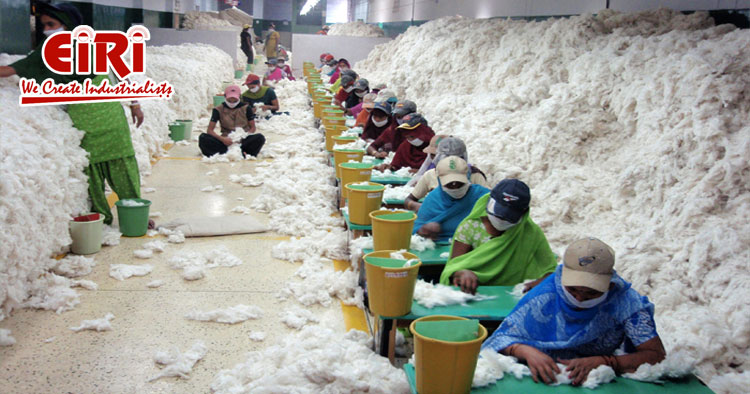
Cotton is a fiber crop growing in varying soils, climates, and cultural practices. The demand for clothing production needs the raw material of cotton, though synthetic fiber is also a suitable alternative.
What is the need for ginning cotton?
Cotton ginning is a mechanical process in two stages. It is to remove trash from cotton bolls that may include soil, stems, other debris, and burrs. Removing and separating from the seed, the cotton bolls give cotton fibers.
What is the difference between spinning and ginning?
The cotton balls contain seeds, and removing the seed process is ginning. On removing seeds, it undergoes spinning and becomes yarn.
Cotton ginning is to use of specialized machinery to separate from raw cotton the cotton seeds. It is the harvested cotton capsules that have the cotton seeds, and removing it is mandatory so that the cotton is useful in textile production. The fiber ginned undergoes pressing and made into bales, and the cotton value is determined. Later, it is classed as per the length of the fiber, micronaire, strength, cleanness, and color.
Why ginning and spinning are crucial?
The process of ginning eliminates seeds and cleans the fibers. It is crucial to clean cotton. If not, even a spun yarn will break during fiber evaluation. Most cotton ginning moves fast griping the fibers, and after passing through pipes in a series, it is pressed into bales under high pressure.
The need for spinning is not less important as it is the place where the yarn becomes a cloth using larger machinery.
Ginning Objects
- Make the spinning process effective and easier
- Ensure fiber-free cotton seeds without any cut fiber
- Be confident of the fiber that it has no unexpected seeds or particles
- Ensure cotton quality and get in the market fair cotton price
Cotton ginning types
Cotton ginning is of two types, Saw and Roller Ginning.
- Saw ginning gives clean cotton in comparison with the handheld or manual separation process of seed from cotton. It is more uniform and clean cotton.
- Roller ginning offers maximized productivity as it is automatic ginning. The production is high due to the advanced technology used.
The faults of the cotton ginning process are crushed seeds, gin-cut fiber, much wastage, and neps formation.
How to start a cotton ginning and spinning mill business?
The first step is to perform market research. Find out if the competition is low or high. Identify the startup cost, profit potential, required equipment, and more.
The second step is in making adequate planning. It should develop accurate business plans and document planning. It should include vital details, marketing strategy, market analysis, competition, startup unique selling points, costs, earnings expected, and so on.
The third step is registering for permits and licenses. Contact an attorney and complete the requirements of cotton ginning.
The fourth step is to find a good location having enough supply of water, electricity, and utilities to run the business. Buy high-quality equipment and use the latest technology. Finally, hire employees.
Sustainability factors for ginners and spinners in a mill business
1. Adequate volume availability
Directly ginning requires adequate volume availability of cotton to prove sustainability. It relies on other factors such as environmental issues, market share, land availability, water availability, and other factors. It means for cotton production to revive, the complete chain from farm to end user, besides its byproducts should be utilized. It helps decrease the prices of cotton lint and the competitiveness enhances the need.
2. Low cost for pressing or ginning production
The ginning cost gets affected by moisture content, quality, machine picking, hand picking, mechanical harvesting, and hand stripping harvesting methods. Transporting cotton to equipment and processing machines also affects production. With moisture and trash content, ensure to adopt practices that keep the trash content low and at desired levels are the moisture content.
3. Retention of natural fiber parameters
Ginners profit from offering the best fiber parameters. Gentle treatment and technology play a crucial role in the processing of fiber. The ginning requirement should fulfill the parameters after ginning concerning length, strength, micronaire, desired moisture content, and uniformity. To retain ginning parameters optimization, growing one variety is the best. The fiber parameters are about the ginning equipment setting, feeding the ginning machine, temperature, machine speed, moisture content, and trash content.
4. Highest outturn
The cotton parameters at the ginning time should be perfect. The ginners get more quantity of fiber with the best parameters. The seed is also suitable for next use. Clean cotton outturn while ginning is helpful. The cotton variety features a higher fiber bunch and enhances ginner profits. Thus, with seed cotton, there is a higher return.
6. Least contamination
Using the best methods of storing, picking, and transportation, the level of contamination is minimal. The scanning machines and the modernization of ginning factories ensure receiving complete cotton chain value. The byproducts such as the linter, hull, cotton seed, oil cake, meat or kernel for oil, cotton stalk, etc, should provide income to the ginner and farmer so that it helps reduce the cotton price.