The contraceptive industry sits at the intersection of public health, social change and commercial opportunity. Demand for reliable, safe, and accessible contraception is driven by urbanization, greater female labour-force participation, rising education, government family-planning initiatives, and expanding sexual and reproductive health services. For entrepreneurs and manufacturers, the sector offers a range of product types, diverse channels to reach users, and multiple avenues for innovation — from low-cost mass-market barrier methods to high-margin medical devices and digital services that improve adherence and distribution. This guide is written for those who want to build a new venture in the contraceptive value chain: it distills product categories, market demand drivers, manufacturing and regulatory realities, go-to-market strategies, and emerging opportunities that make the industry attractive today.
Product categories and where value lies
Contraceptives comprise a diverse range of products that differ significantly in terms of technology, manufacturing complexity, regulatory requirements, and market access. Understanding this product segregation is essential for entrepreneurs and manufacturers because each category demands a distinct business strategy, capital commitment, and route to market.
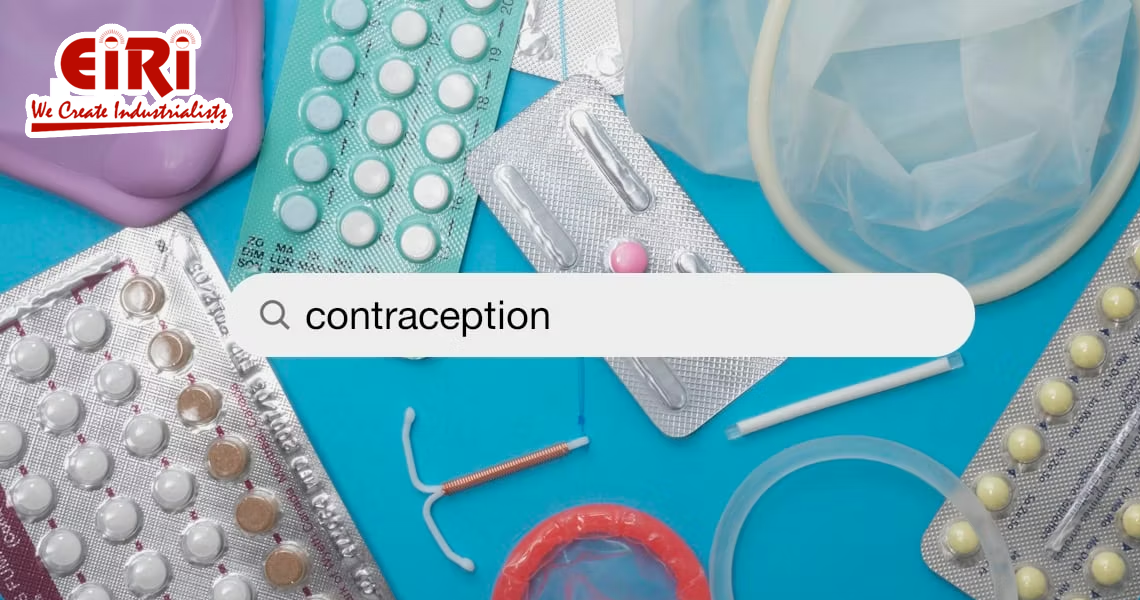
- Barrier contraceptives represent the most accessible and commercially scalable segment of the industry. Products such as male condoms, female condoms, diaphragms, and cervical caps are classified as consumer health or medical-grade consumer products, depending on jurisdiction. Among these, male condoms dominate global volumes due to their affordability, ease of use, and unique ability to provide dual protection against both unintended pregnancy and sexually transmitted infections. Manufacturing in this segment is largely driven by high-volume production, cost efficiency, and strict adherence to quality standards related to material strength, leak resistance, and packaging integrity. For new manufacturers, barrier methods offer a relatively lower regulatory burden compared to pharmaceuticals, making them an attractive entry point into the contraceptive industry, particularly when supported by strong retail and public health distribution networks.
- Hormonal contraceptives form a more technically demanding and regulation-intensive segment. This category includes oral contraceptive pills, injectable contraceptives, transdermal patches, hormonal implants, and vaginal hormone-delivery systems. These products function through controlled hormonal dosing and therefore fall under pharmaceutical regulation in most markets. Manufacturing requires access to high-quality active pharmaceutical ingredients, validated formulation processes, sterile or semi-sterile production environments, and comprehensive quality assurance systems. Regulatory approvals often involve stability studies, bioequivalence data, and post-marketing surveillance obligations. While the entry barriers are higher, hormonal contraceptives offer consistent demand, recurring revenue, and strong integration with clinical and pharmacy-based distribution channels, making them strategically valuable for companies with pharmaceutical capabilities.
- Long-acting reversible contraceptives, particularly intrauterine devices and intrauterine systems, occupy a distinct space within the medical device segment. These products combine material science, precision engineering, and clinical usability, requiring compliance with medical device regulations and device-specific quality systems. Although manufacturing these products involves higher upfront investment and technical expertise, their long duration of effectiveness creates strong user retention and higher value per unit. Demand for these products is growing steadily due to their reliability, convenience, and endorsement by healthcare professionals as cost-effective long-term solutions. For manufacturers, this segment offers attractive margins and long-term institutional procurement opportunities, especially through hospitals, clinics, and national family-planning programmes.
- Emergency contraceptives and chemical contraceptives represent niche but strategically important product categories. Emergency contraceptive pills are time-sensitive pharmaceutical products with strong demand in urban and semi-urban markets, often purchased through pharmacies without long-term usage commitment. Spermicides and non-hormonal vaginal products cater to users seeking hormone-free or situational contraception, typically requiring moderate regulatory oversight and targeted consumer education. These segments are smaller in volume but allow for product differentiation, branding, and innovation, particularly in formulations, delivery mechanisms, and packaging designed for discretion and ease of use.
- Permanent contraceptive solutions and associated consumables form the most clinically integrated segment of the industry. Sterilization procedures, such as tubal ligation and vasectomy, rely on surgical instruments, medical devices, and consumables rather than mass-market retail products. Demand in this category is closely linked to healthcare infrastructure, government policies, and public health initiatives. While not suited to direct-to-consumer manufacturing models, this segment offers stable institutional demand for device manufacturers and suppliers that can meet clinical standards and procurement requirements.
Taken together, this product segregation highlights that the contraceptive industry is not a single market but a collection of interconnected segments, each with its own economics and risk profile. Entrepreneurs who clearly align their capabilities with the right product category - whether mass-volume consumer goods, regulated pharmaceuticals, advanced medical devices, or clinical supplies - are better positioned to build sustainable and scalable contraceptive manufacturing ventures.
Market dynamics and demand drivers
Market demand for contraceptives differs across countries, regions and user segments. In emerging markets, population growth and unmet need for family planning create a consistent baseline demand; improvements in logistics and distribution are expanding reach into peri-urban and rural areas. In high-income markets, demand shifts toward convenience, discretion and technology-enabled solutions such as long-acting reversible contraceptives and app-supported services. Policy decisions, donor funding, and national family-planning programmes shape price sensitivity and procurement cycles. Social trends - delayed marriage, smaller desired family size, and increased prioritization of women’s career trajectories — also support growth in female-controlled methods and discreet products. Importantly, public procurement can flood markets with low-cost options, pushing private manufacturers either to compete on price or to differentiate through quality, branding and value-added services.
Regulatory landscape and compliance essentials
Manufacturing contraception is regulated; the specific requirements depend on product classification — whether a consumer good, pharmaceutical, or medical device. Entrepreneurs must familiarise themselves with national regulatory authorities, required registrations, clinical evidence thresholds, and post-market surveillance rules. Quality systems such as Good Manufacturing Practices (GMP) for pharmaceuticals and ISO 13485 for medical devices are often mandatory or expected by procurement agencies and private buyers. For condoms and barrier methods, standards for material safety, tensile strength, leak testing and packaging integrity are critical. Hormonal products demand stringent control of active pharmaceutical ingredients, validated production processes, and stability data. For entry into export markets, compliance with international standards and the ability to support regulatory dossiers will be decisive. Early investment in quality assurance, transparent documentation, and relationships with regulatory consultants or certified labs significantly reduces time-to-market risk.
Manufacturing considerations and sourcing
The choice of manufacturing model — in-house production, contract manufacturing (CMO), or licensing — depends on capital, technical expertise and targeted product mix. Barrier methods and condoms require rubber processing, film production, curing tunnels and high-speed packaging lines. For condoms, raw material quality (natural rubber latex or polyurethane alternatives) and access to reliable suppliers are fundamental. Pharmaceutical contraceptives require formulation facilities, cleanrooms for sterile products where needed, precision filling and blistering lines, and strong supply relationships for APIs. Medical devices such as IUDs often combine polymer and metal components, injection molding, and aseptic packaging; these require tool-making and device validation capabilities. Across all categories, testing infrastructure (microbiology, stability chambers, mechanical testing), validated sterilization processes and batch traceability systems are mandatory. For entrepreneurs without existing facilities, partnering with experienced CMOs can reduce capital outlay while accelerating market entry, though it limits control and may compress margins.
Quality, safety and clinical evidence
Safety is non-negotiable in contraceptives; adverse events quickly damage trust and market viability. Building a robust pharmacovigilance and post-market surveillance framework is essential. For novel devices or formulations, clinical trials or human factors studies may be required to demonstrate safety and usability. Even established products need consistent lot testing and stability data to assure purchasers and regulatory bodies. Investing in accredited third-party testing labs and obtaining certifications can be a differentiator when bidding for institutional contracts. For consumer-facing brands, transparent communication about efficacy, side effects, and correct use improves adherence and brand loyalty; for medical channels, clinician education and published evidence help adoption.
Packaging, branding and user experience
Packaging in the contraceptive market is both functional and communicative. From the perspective of safety, impermeable blister packs, tamper-evident seals and clear expiry information are essential. From a marketing standpoint, discreet, gender-sensitive, and culturally informed design can influence purchase decisions. For condoms, luxury or niche brands often succeed by positioning around texture, flavour, or lifestyle imagery, while public health programmes prioritise clear usage instructions and cost-effective secondary packaging. For hormonal methods and devices, product inserts, clinician guides, and digital resources that support correct use can accelerate uptake. Thoughtful packaging that reduces environmental footprint — such as recyclable cartons and minimal plastic — is increasingly valued by consumers and procurement agencies.
Distribution channels and go-to-market strategies
Distribution choices shape growth trajectory. Mass-market channels — supermarkets, pharmacies, e-commerce platforms and general retail — are ideal for condoms and over-the-counter contraceptives. Pharmacy and clinic channels dominate for prescription and device-based methods. Institutional procurement through government family-planning programmes and international donors can provide high-volume contracts but require competitive pricing and compliance with tender rules. Digital health platforms and telemedicine are rapidly changing how users access contraception: online consultations, prescription fulfilment, and subscription delivery models improve convenience and adherence. Rural outreach often depends on partnerships with NGOs, community health workers, and micro-distribution networks. A successful go-to-market plan typically blends multiple channels: retail brand presence for awareness, clinical partnerships for credibility, and digital services for retention.
Pricing, procurement and revenue models
Pricing strategies differ by product. Condoms and over-the-counter products compete on low unit cost for mass volume, often supplemented by value packs or premium variants. Hormonal products and devices carry higher per-unit costs, allowing margin opportunities, but they also encounter procurement scrutiny from payers and public programmes. Revenue models may include direct-to-consumer sales, institutional tenders, subscription services, and partnerships with sexual and reproductive health providers. For new entrepreneurs, pilot programmes with NGOs or local health systems can validate demand and provide data for scaling. Exporting to neighbouring markets or leveraging private-label manufacturing for established brands can diversify revenue and improve capacity utilisation.
Emerging opportunities and innovation spaces
Several innovation vectors are reshaping the contraceptive landscape. Long-acting reversible contraceptives and discreet female-controlled options address unmet needs for convenience and autonomy. Male contraceptive research is generating interest in novel hormonal and non-hormonal methods that could open new markets if they reach commercialization. Digital tools that deliver adherence reminders, tele-prescription services, and fertility-tracking integrations create sticky customer relationships. Sustainable materials and eco-friendly packaging respond to consumer and regulatory pressures. There is also room for innovation in last-mile distribution - low-cost vending machines, clinic inventory management systems, and micro-entrepreneur networks that enhance access in underserved areas. Social marketing and behaviour-change campaigns combined with product innovations create powerful synergies for scaling adoption.
Market demand and future growth
The market demand for contraceptives is shaped by enduring global demographic trends, evolving social norms, and expanding access to healthcare, creating a compelling growth trajectory over the coming decade. Rapid urbanization, rising levels of education - especially among women—and increased participation of women in the workforce are driving greater awareness and sustained use of family-planning solutions.
In emerging economies, unmet demand remains significant, as national health systems and non-governmental organisations work to close gaps in accessibility, affordability, and distribution, especially in peri-urban and rural communities. In more developed markets, the demand mix is shifting toward convenience, personalization, and innovation, with users seeking long-acting reversible contraceptives, hormone-free options, and digital support tools for adherence and reproductive health tracking. Public health initiatives and government family-planning programs continue to stimulate procurement at scale, while donor funding supports low-cost and subsidised supply, particularly for barrier methods.
At the same time, private sector engagement and direct-to-consumer channels - including e-commerce platforms and telehealth services—are broadening reach, improving convenience, and enabling brands to build direct relationships with users. As a result, the contraceptive market is expected to experience steady growth driven by demographic expansion, higher contraceptive prevalence rates, technological innovation, and diversified distribution models, offering fertile opportunities for new entrants who can balance quality, affordability, and culturally sensitive marketing.
The contraceptive industry represents a rare convergence of social impact and sustainable commercial potential. As populations grow, lifestyles evolve, and healthcare systems place greater emphasis on planned parenthood and reproductive well-being, demand for safe, reliable, and accessible contraceptive solutions will continue to rise. The industry’s diversity—spanning high-volume consumer products, regulated pharmaceutical formulations, advanced medical devices, and clinical consumables—allows entrepreneurs to enter at multiple levels depending on their technical expertise, investment capacity, and long-term vision.
For manufacturers and new industry entrants, success in this sector depends on strategic product selection, regulatory preparedness, uncompromising quality standards, and well-designed distribution models. While competition exists, significant gaps remain in affordability, last-mile access, innovation, and user-centric design, particularly in emerging and underserved markets. Businesses that align manufacturing efficiency with responsible marketing, clinical credibility, and evolving consumer expectations are well positioned to build resilient brands and long-term value.
Ultimately, the contraceptive industry is not only about producing products; it is about enabling informed choices, supporting public health goals, and contributing to economic and social development. Entrepreneurs who approach this sector with a balance of commercial discipline and social responsibility will find it to be a future-ready industry with enduring relevance and meaningful growth opportunities.