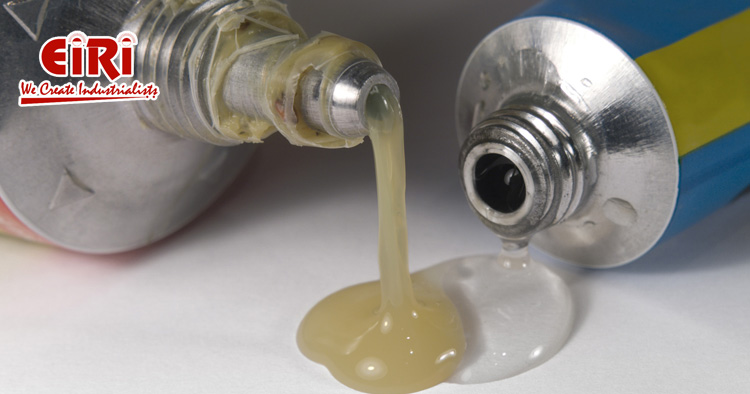
Adhesives, often referred to as glues or bonding agents, are substances used to join materials by forming a strong bond between surfaces. They play a crucial role in various industries, including construction, woodworking, automotive, packaging, and consumer goods. Adhesives are formulated to adhere to different materials such as wood, metal, glass, plastic, and fabrics, offering versatility in applications.
Types of Adhesives
Polyvinyl Acetate (PVA) Adhesives:
Description:
Polyvinyl acetate (PVA) adhesives, akin to Fevicol, are water-based and widely utilized in woodworking, furniture making, and packaging industries. These adhesives consist of polymers derived from vinyl acetate monomers, offering a milky-white appearance in liquid form that dries clear upon curing. PVA adhesives are renowned for their ease of application, affordability, and versatility across various substrates.
Applications:
PVA adhesives excel in bonding porous materials such as wood, paper, cardboard, and fabric. They create strong bonds suitable for assembly, packaging, and crafting applications. Common uses include laminating veneers, edge bonding in carpentry, and adhering labels and paperboard in packaging.
Properties:
PVA adhesives are favored for their non-toxic nature and minimal odor, making them user-friendly in indoor environments. They exhibit good adhesive strength on porous surfaces, forming flexible bonds that resist cracking and shrinking over time. Their water-based formulation allows for easy cleanup with water, enhancing their appeal for both industrial and consumer applications.
Epoxy Adhesives:
Description:
Epoxy adhesives are robust, two-part systems that cure into a durable bond through a chemical reaction between resin and hardener components. These adhesives are characterized by their high strength, toughness, and resistance to chemicals and environmental stressors.
Applications:
Epoxy adhesives are indispensable in industries requiring superior bonding capabilities, such as aerospace, automotive, and construction. They effectively bond metals, ceramics, glass, and plastics, offering excellent adhesion even in challenging conditions like high temperatures and exposure to harsh chemicals.
Properties:
Known for their structural integrity and versatility, epoxy adhesives provide a high degree of bond strength and durability. They can be formulated to cure rapidly or slowly, depending on application requirements. Their ability to fill gaps and resist moisture ingress makes them suitable for applications demanding dimensional stability and long-term performance.
Acrylic Adhesives:
Description:
Acrylic adhesives encompass a broad range of formulations that can be solvent-based or water-based, depending on application needs. These adhesives derive from acrylic polymers and offer diverse properties suitable for various bonding applications.
Applications:
Acrylic adhesives find widespread use in automotive assembly, aerospace manufacturing, and construction projects. They bond metals, plastics, and composites effectively, offering good adhesion to both similar and dissimilar materials. Their versatility extends to applications requiring flexibility, impact resistance, and weatherability.
Properties:
Acrylic adhesives are valued for their fast curing times and ability to maintain bond strength over a wide range of temperatures and environmental conditions. They exhibit excellent resistance to UV radiation and weathering, making them suitable for outdoor applications. Acrylic adhesives can be engineered to provide varying degrees of flexibility or rigidity, enhancing their adaptability across different industries.
Hot Melt Adhesives:
Description:
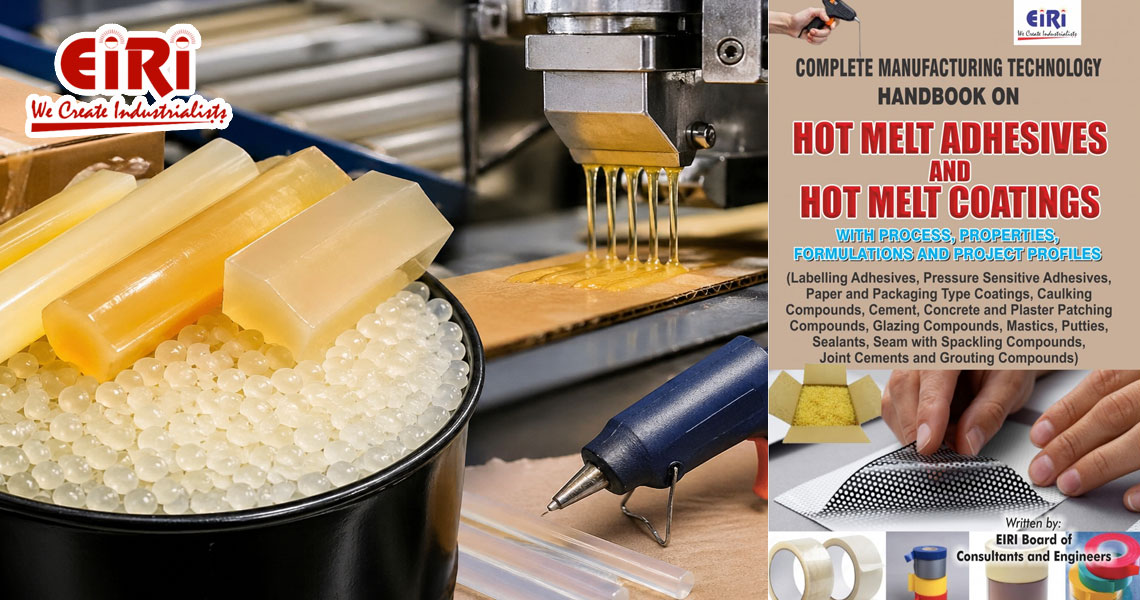
Hot melt adhesives (HMAs) are solid at room temperature and liquefy when heated, typically applied in a molten state. They are composed of thermoplastic polymers and additives that contribute to their adhesive properties.
Applications:
HMAs are ideal for rapid bonding applications in packaging, bookbinding, and product assembly due to their fast setting times and strong initial bonds. They are used extensively in industries requiring high throughput and efficient production processes.
Properties:
HMAs offer immediate bond strength upon cooling and solidification, facilitating rapid assembly and packaging operations. They provide excellent adhesion to a wide range of substrates, including paper, cardboard, plastics, and textiles. HMAs can be formulated for specific application requirements, such as heat resistance or flexibility, ensuring optimal performance in diverse manufacturing environments.
Market Potential for Adhesives
The global adhesive market is experiencing significant growth, driven by increasing demand across various end-use industries. Factors contributing to this growth include:
- Construction Industry: Adhesives are used in construction for bonding materials like tiles, insulation panels, and flooring materials, replacing traditional methods like nails and screws.
- Packaging Industry: Adhesives are essential for packaging applications, providing secure seals and efficient assembly of boxes and cartons.
- Automotive Sector: Adhesives contribute to vehicle lightweighting efforts, improving fuel efficiency and reducing emissions by replacing mechanical fasteners.
Steps to Start an Adhesive Manufacturing Business
Market Research and Business Planning:
- Conduct thorough market research to understand demand, competition, and potential customers.
- Develop a comprehensive business plan outlining your products, target market, marketing strategies, and financial projections.
Legal and Regulatory Compliance:
- Register your business and obtain necessary licenses and permits for manufacturing and selling adhesives.
- Ensure compliance with environmental regulations and safety standards for chemical manufacturing.
Setting up Manufacturing Facilities:
- Identify a suitable location with adequate space for production, storage, and packaging operations.
- Install necessary equipment for mixing, blending, and packaging adhesives, ensuring efficiency and quality control.
Raw Material Sourcing and Formulation:
- Source high-quality raw materials, including resins, fillers, solvents, and additives, from reliable suppliers.
- Develop adhesive formulations that meet industry standards and customer requirements, considering factors like viscosity, bond strength, and curing time.
Quality Control and Testing:
- Implement strict quality control measures to ensure consistency and reliability of adhesive products.
- Conduct testing for adhesive strength, durability, and performance under different environmental conditions.
Marketing and Sales Strategy:
- Create a strong brand identity and packaging that communicates quality and reliability.
- Establish distribution channels through partnerships with distributors, wholesalers, and direct sales to industries.
Expansion and Diversification:
- Explore opportunities for product diversification, such as specialty adhesives for niche markets or customized formulations.
- Continuously innovate and improve products based on customer feedback and technological advancements.
Conclusion
Starting an adhesive manufacturing business offers promising opportunities in a growing market driven by diverse industrial applications. By focusing on quality, innovation, and customer satisfaction, entrepreneurs can establish a successful venture in the adhesive industry. With careful planning, adherence to regulations, and a strategic approach to marketing and product development, your adhesive manufacturing business can thrive and contribute to the evolving needs of industries worldwide.